


Table of Contents
- Step 1: Define Your Project Scope and Budget
- Step 2: Build Your Contractor Search List
- Step 3: Questions to Ask a Remodeling Contractor
- Step 4: How to Compare Contractor Bids
- Step 5: Verify Licenses, Insurance, and Bonding
- Whole House Remodel Contractor Checklist
- Step 6: What to Include in a Remodeling Contract
- Red Flags and How to Avoid Contractor Scams
- Frequently Asked Questions
Last Updated: October 19, 2026
Learning how to find contractors for complete home remodel is one of the biggest decisions a homeowner can make. The difference between hiring someone trustworthy and ending up with a nightmare project often comes down to how thoroughly you vet your options before signing a contract. We’ve seen firsthand what separates successful remodels from costly disasters. Technical precision remains essential throughout the process, especially when hiring electrical contractors to ensure that your home’s infrastructure meets modern safety standards.
This guide walks you through how to find contractors for complete home remodel projects step by step. You’ll learn how to define your scope, build a qualified contractor search list, ask the right questions, compare bids fairly, and verify credentials before you commit. By the end, you’ll have a clear roadmap for hiring a remodeling contractor who delivers on time and on budget.
Step 1: Define Your Project Scope and Budget
Before you reach out to a single contractor, get crystal clear on what you’re actually building. A vague project description leads to vague bids, scope creep, and arguments about what was included.
Write down exactly what you want to remodel. Are you doing a kitchen remodel, a bathroom remodel, a master suite refresh, or a whole-house renovation? List the rooms involved, the major systems being touched (electrical, plumbing, HVAC), and any structural changes like removing walls or adding a home addition.
Next, establish a realistic budget range. This doesn’t mean you need exact numbers yet, just a ballpark. Are you thinking $30K, $80K, or $150K? Your budget shapes which contractors you’ll approach and what quality level you can expect. Be honest with yourself about what you can afford.
Write your scope on a single page. Include photos of the existing space, a list of rooms, and your must-haves versus nice-to-haves. This document becomes your baseline for every contractor conversation.
Step 2: Build Your Contractor Search List
Finding qualified remodeling contractors starts with knowing where to look. You need multiple candidates to compare, but not so many that the process becomes overwhelming.
Start with local contractor directories and referrals. Ask friends, family, and neighbors who’ve had recent work done. Personal recommendations carry weight, if someone you trust had a good experience, that’s valuable intel. Check online reviews on Google, Yelp, and the Better Business Bureau. Look for contractors with consistent 4.5+ star ratings and recent reviews.
Search for general contractors in your area who specialize in residential remodeling. Look specifically for whole-house remodel contractors or those listing kitchen and bathroom remodeling as core services. Verify they’re licensed, bonded, and insured in your state.
Build a list of at least 3-5 contractors. This gives you real comparison data and reduces the risk of picking the wrong person. Aim for a mix: one or two established firms, one or two smaller operations, and one that comes highly recommended by someone you know.
Avoid contractors who won’t provide references or who can’t show you a portfolio of completed projects. This is a red flag that they either don’t have experience or they’re hiding something.
Step 3: Questions to Ask a Remodeling Contractor
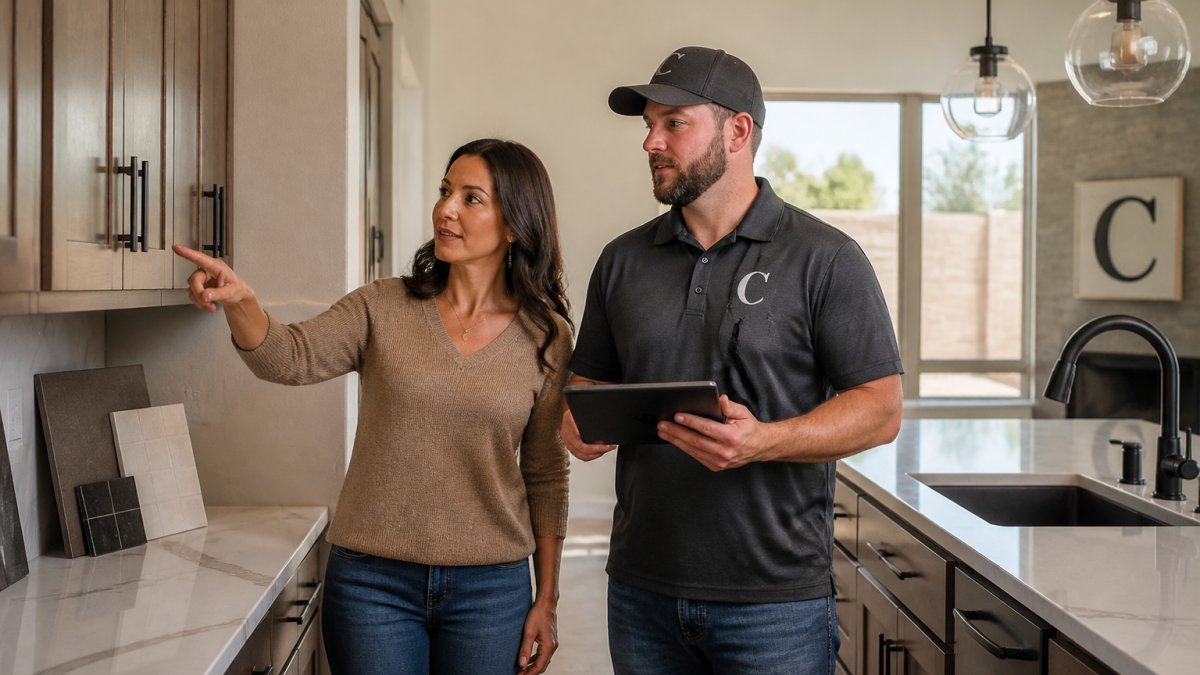
Your initial conversations with contractors reveal a lot about how they work. Ask the right questions and you’ll spot problem contractors early.
Start with experience and credentials. How long have they been in business? How many complete home remodels have they done? Do they hold all required licenses and insurance?
Then dig into their process. How do they handle the design phase? Do they work with an architect, or do they design in-house?
Ask about their team. Will you work directly with the owner, or will a project manager be your main contact? How often will they be on-site? For a whole-house remodel, consistent oversight matters.
Get specifics on payment terms. Do they require a large upfront deposit, or do they work on a phased payment schedule tied to project milestones?
Ask about warranties and guarantees. What do they warranty on their workmanship? For how long? What about materials, do they guarantee the quality of products they install?
Finally, ask how they handle disputes. If something goes wrong or you disagree on costs, what’s their process? Do they mediate, or do they go straight to legal action?
Step 4: How to Compare Contractor Bids
Getting multiple bids is essential, but comparing them fairly requires knowing what you’re actually looking at. Bids that look similar on the surface can be wildly different in scope.
Request written bids from at least three contractors. Ask each one to bid on the exact same scope of work using your project description. This ensures you’re comparing apples to apples.
Review each bid line by line. A detailed bid breaks down labor, materials, permits, and contingencies. If a bid is vague, just a single number with no detail, that’s a problem. You can’t track scope creep or understand where your money is going.
Watch for bids that are drastically lower than others. A bid that’s 30% cheaper than the competition usually means something is missing. Either the contractor is cutting corners, they’ve underestimated the work, or they plan to upsell you mid-project.
Compare what’s included. Does one bid include permits and inspections while another doesn’t? Does one include a design consultation and another assume you’ve already hired an architect? These differences add up.
Ask about contingencies. Most contractors budget 10-15% of the total project cost for unexpected issues. If a bid has no contingency, you’re at risk for surprise costs the moment something unexpected happens.
The cheapest bid is rarely the best deal. You’re paying for experience, reliability, and quality. Compare the full package: credentials, communication style, warranty, and price together.
| Comparison Factor | What to Look For | Why It Matters |
|---|---|---|
| Bid Detail | Line-by-line breakdown of labor, materials, permits | Vague bids hide cost surprises |
| Scope Alignment | Each bid covers the exact same work | Ensures fair price comparison |
| Contingency | 10-15% budget for unexpected issues | Protects you from shock costs |
| Timeline | Clear start and completion dates | Prevents open-ended projects |
| Payment Schedule | Milestone-based, not front-loaded | Protects your investment |
Step 5: Verify Licenses, Insurance, and Bonding
This step separates professional contractors from amateurs. Never skip it.
Verify the contractor’s license with your state’s licensing board. Most states require general contractors to hold a residential contractor license. Search the board’s website using the contractor’s name or license number. Check that the license is current and in good standing. Look for any disciplinary history or complaints.
Confirm they carry liability insurance and workers’ compensation insurance. Ask for a certificate of insurance and verify the coverage amounts are adequate for a whole-house remodel. Insurance protects you if someone is injured on your property or if damage occurs.
Check bonding status. A performance bond guarantees the contractor will complete the work as promised. A payment bond ensures subcontractors and material suppliers get paid. Ask the contractor for proof of bonding.
Run a background check through the Better Business Bureau or your state’s contractor complaint database. Look for unresolved complaints or patterns of disputes. One or two complaints over years of business is normal; dozens of complaints is a warning sign.
Ask for references from recent whole-house remodel projects. Call at least two or three and ask specific questions: Did the project finish on time? Was it on budget? Did the contractor communicate well? Would you hire them again?
Whole House Remodel Contractor Checklist
Use this checklist when evaluating remodeling contractors for your complete home remodel:
- Licensed, bonded, and insured (verified online)
- 5+ years of whole-house remodeling experience
- Portfolio of completed projects similar to yours
- At least 3 recent references you’ve contacted
- Written bid with detailed scope and timeline
- Clear payment schedule tied to project milestones
- Explanation of how they handle mid-project changes and cost overruns
- Warranty details in writing
- Communication plan (how often you’ll hear from them)
- Proof of workers’ compensation and liability insurance
- No unresolved complaints with the Better Business Bureau
- Direct contact with owner or named project manager
- Contract reviewed by you before signing
Step 6: What to Include in a Remodeling Contract
A solid contract protects both you and the contractor. Don’t sign anything without reviewing these key elements.
The contract must include a detailed scope of work. This is your protection against scope creep. Every room, every fixture, every system change should be listed. If it’s not in the contract, it’s not part of the project.
Include a timeline with start and completion dates. Specify any penalties if the contractor misses the deadline, or conversely, any bonus if they finish early. Build in realistic buffers for inspections and permit approvals.
Detail the payment schedule. Most contracts use a phased approach: deposit upon signing, progress payments at key milestones, and final payment upon completion. Never pay the full amount upfront.
Specify how changes are handled. If you decide mid-project to upgrade appliances or add an extra bathroom, how will that be priced and approved? A change order process prevents surprises.
Include warranty terms. What does the contractor guarantee, and for how long? Most reputable contractors offer a one-year warranty on workmanship.
State what happens if disputes arise. Will you use mediation or arbitration before going to court? This can save time and money if problems develop.
Add a clause about permits and inspections. Who’s responsible for pulling permits? Who attends inspections? Who pays for failed inspections that require rework?
Never sign a contract that requires full payment upfront or that doesn’t include a detailed scope of work. These are classic signs of a contractor who plans to disappear or who doesn’t take the project seriously.
Red Flags and How to Avoid Contractor Scams
Some contractors operate with integrity. Others prey on homeowners’ trust. Know the warning signs.
A contractor who insists on cash-only payments is a major red flag. Legitimate businesses accept checks or electronic transfers so there’s a paper trail.
Avoid contractors who pressure you to sign immediately or who won’t put promises in writing. If they say “trust me” instead of documenting agreements, walk away. Legitimate contractors document everything.
Be wary of extremely low bids. If one contractor comes in 40% cheaper than everyone else, there’s a reason.
Contractors who won’t provide references or insurance information are hiding something. A professional is proud of their work and happy to prove their credentials.
Watch for contractors who demand large upfront deposits. Anything more than 10-15% is excessive and puts your money at risk. Phased payments tied to completion milestones protect you.
If a contractor tries to work around permits or inspections, stop. Building codes exist to protect your safety and your home’s value.
Finally, don’t let a contractor isolate you from decision-making. You should be informed and involved throughout the project.
Finding the right contractor for a complete home remodel doesn’t have to be stressful. If you’re ready to move forward, get a free quote and let us show you what stress-free project management looks like.
Frequently Asked Questions
What should I ask a contractor before hiring them for a complete home remodel?
Start by asking about their experience with whole-house projects, how they manage timelines and budgets, and their approach to unexpected issues. Request references from similar projects, confirmation of ROC licensing and bonding, and their communication method throughout the project. Ask how they handle changes to the project scope and what their payment schedule looks like. Understanding their process upfront prevents misalignment later.
How do I verify a contractor’s license, insurance, and bonding?
Check the contractor’s ROC (Residential Contractor) license number on the Arizona Registrar of Contractors website. Request proof of general liability insurance and workers’ compensation coverage. Ask your contractor for their bonding information and verify it directly with the bonding company. Never proceed without seeing documentation, this protects you if something goes wrong during your home remodel.
How many contractor bids should I get for a whole-house renovation?
Aim for 3-5 bids from qualified contractors. This gives you a realistic range without overwhelming your decision-making process. Compare not just price but timeline, warranty, materials, and the contractor’s communication style.
What red flags should I watch for when hiring a remodeling contractor?
Be cautious of contractors who demand large upfront payments, refuse to provide written contracts, lack verifiable references, or pressure you into quick decisions. Avoid those who can’t explain their pricing clearly or won’t discuss how they handle project changes. Contractors who avoid discussing licensing or insurance, or who work entirely cash-only, are high-risk choices for a complete home remodel.