


Table of Contents
- What Makes High-End Home Renovation Services Different
- How to Compare Remodeling Quotes Beyond the Bottom Line
- Questions to Ask a Remodeling Contractor Before Signing
- Remodeling Contractor Communication: What to Expect and Demand
- Home Renovation Project Timeline: Realistic Expectations and Hidden Delays
- The Real Cost of Poor Communication in Kitchen and Whole-Home Renovations
- How to Verify a Contractor’s Credentials and Accountability
- Frequently Asked Questions
Last Updated: October 12, 2026
What Makes High-End Home Renovation Services Different
High-end home renovation services differ from standard contractors in three concrete ways: accountability structure, communication frequency, and how they handle unexpected costs. Most contractors assign you to a project manager after the initial sale. Premium services keep you connected to decision-makers throughout the build.
At Crosspoint Contracting, we’ve spent 16 years remodeling homes and commercial spaces across the Phoenix Valley. The difference between a stress-free project and a frustrating one rarely comes down to price alone. It comes down to who answers the phone when something goes wrong at 2 p.m. on a Wednesday.
A general contractor working with a rotating cast of project managers creates friction. Changes take longer to approve. Updates get lost in translation. Homeowners end up managing the project instead of the contractor managing it. High-end renovation services eliminate that middle layer. You work directly with the owner or a single point person who has real authority to make decisions.
The second differentiator is transparency on costs. Standard contractors often discover problems mid-project and present them as surprises. “We found structural damage. That’s another $15K.” Premium services build contingency into the scope and communicate proactively when issues arise. They show you the options and let you decide, not the other way around.
The real premium you’re paying for isn’t fancy finishes. It’s accountability, same-day communication, and someone who actually owns the outcome of your project.
How to Compare Remodeling Quotes Beyond the Bottom Line
When you’re comparing remodeling quotes, the lowest number wins only if everything else is equal. It rarely is. Three contractors can quote the same kitchen remodel at wildly different prices because they’re scoping different work.
The first thing to do is verify that all three quotes cover the same scope. Get them in writing. A good quote includes:
- Materials specified by brand and grade (not “tile” but “Daltile subway tile, matte finish, 3×6”)
- Labor broken down by trade (framing, electrical, plumbing, finish)
- Timeline with start and end dates
- Change order process and how extra costs are handled
- Warranty on workmanship and materials
If one quote is dramatically lower, ask why. Sometimes it’s because they’re cutting corners on materials. Sometimes they’re not including permits or inspections. Sometimes they’re underestimating the work and you’ll see change orders pile up later.
The second thing to examine is how the contractor handles the conversation about cost. Do they explain their pricing? Do they push back on unrealistic budgets, or do they just agree to anything? A contractor who says “your budget is too tight for what you’re asking” is being honest. One who says “sure, we can do it” might be setting you up for disappointment.
Ask about their cost management process. How do they prevent scope creep? What happens if they find issues during demolition? Do they get approval before spending extra money, or do they just bill you later? These questions reveal whether you’re dealing with someone who respects your budget or someone who treats it as a suggestion.
Questions to Ask a Remodeling Contractor Before Signing
Before you sign a contract, you need answers to these specific questions. Write them down. Make sure the answers match what’s in the contract.
On accountability: “Will I work directly with you, or will I be handed off to a project manager? If it’s a project manager, what’s your role after we sign?” This separates contractors who stay involved from ones who disappear.
On communication: “How often will I get updates? How do I reach you if something urgent comes up? What’s your response time?” Some contractors do weekly check-ins. Others do monthly. Some use project management software that sends automatic updates.
On unexpected costs: “What happens if you find structural damage or code violations during the work? Do you get my approval before spending extra money? How much can you spend without asking?” This is where most homeowners get burned.
On timeline: “What could delay this project? How much buffer are you building in? What happens if we run behind?” Realistic contractors acknowledge that delays happen. They build contingency into the schedule.
On materials and standards: “What’s your warranty on workmanship? What’s covered? For how long?” Also ask: “What building codes apply to this work? Will you pull permits?” Some contractors skip permits to save money and time. That creates liability for you.
On their credentials: “Can you show me your ROC license? Do you have liability insurance and bonding? Can I see proof?” Don’t just take their word for it. Verify it yourself.
The best contractors answer these questions confidently and put the answers in writing. If someone gets defensive or vague, that’s a warning sign.
Remodeling Contractor Communication: What to Expect and Demand
Communication quality is directly tied to project outcomes. It’s also the easiest thing to verify before you hire someone. Watch how they communicate during the sales process. That’s how they’ll communicate during the build.
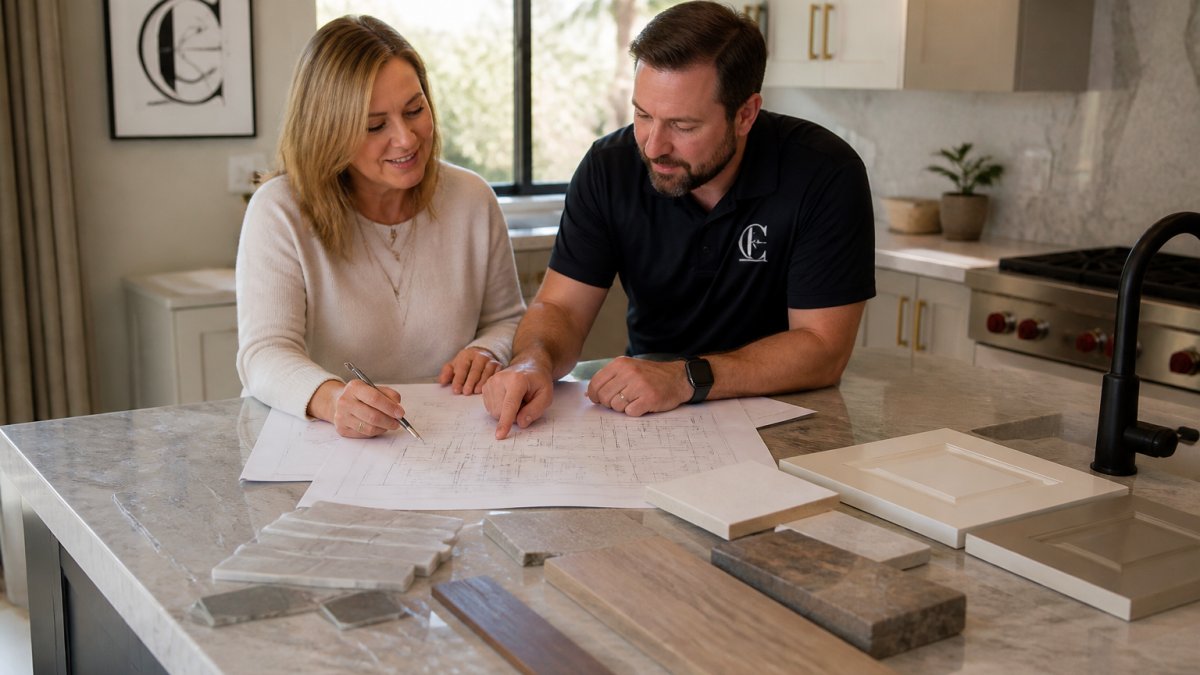
High-end contractors operate on a different communication standard. They don’t wait for you to call and ask for an update. They send updates to you. Some use project management software that tracks every decision and change. Some call you weekly. Some send photos of progress.
What you should demand is same-day response to critical issues. If there’s a problem that affects the timeline or budget, you should know about it that day, not next week. Not all contractors can promise that, but the ones who can operate differently.
You should also demand clarity on decisions. Before any work starts, you should have written approval on every major choice: materials, colors, finishes, layout changes. Nothing should happen because a contractor assumed. Written approval prevents “but I thought you wanted…” conversations later.
The third piece is regular site visits. You shouldn’t have to be there every day, but you should be able to visit without calling ahead. A professional contractor welcomes homeowner involvement. They’re not hiding anything. They want you to see the quality of work in progress.
Home Renovation Project Timeline: Realistic Expectations and Hidden Delays
A home renovation project timeline is only as good as the contractor’s ability to manage it. Most delays come from three sources: material availability, subcontractor scheduling, and unexpected site conditions.
Material delays are real. Some custom finishes take 8-12 weeks to arrive. A contractor who doesn’t account for this in the schedule is setting you up for delays. Ask them upfront what materials have long lead times and whether they’re ordering them before the project starts.
Subcontractor delays are the biggest culprit. A general contractor manages multiple trades: framing, electrical, plumbing, HVAC, tile, paint. If the framing crew finishes early but the electricians are booked, the whole project stalls. Good contractors manage this by locking in subcontractor availability before they commit to your timeline.
Unexpected site conditions are the wild card. You open a wall and find asbestos. You discover the foundation is settling. You find plumbing that doesn’t meet code. These discoveries happen in almost every renovation.
A realistic timeline includes buffer. A 12-week kitchen remodel isn’t actually 12 weeks of work. It’s 10 weeks of work with 2 weeks of buffer for the unexpected. Contractors who promise tight timelines without buffer are either optimistic or planning to cut corners.
Ask the contractor to break down the timeline by phase. Demolition: 1 week. Framing and rough-in: 2 weeks. Drywall and finish: 1.5 weeks. Tile and flooring: 1.5 weeks. Cabinets and counters: 1 week. Paint and final: 1 week.
A contractor who can’t explain their timeline in detail, or who promises completion with zero buffer, is a risk. Delays happen. The question is whether they’ve planned for them.
The Real Cost of Poor Communication in Kitchen and Whole-Home Renovations
Poor communication in a kitchen or whole-home renovation costs money in three ways: change orders, rework, and extended timelines.
Change orders happen when decisions get made during the build instead of before it. The contractor asks about a detail that wasn’t specified, you make a choice on the spot, and that choice costs extra. One change order is normal. Five change orders means the scope wasn’t clear from the start. Every change order extends the timeline and increases the cost.
Rework happens when miscommunication leads to work being done wrong. The contractor installs cabinets in the wrong configuration. The electrician puts outlets in the wrong spots. These mistakes require tearing out work and doing it again. Rework is expensive and demoralizing.
Extended timelines happen when communication breaks down and the contractor doesn’t know what the next step is. They’re waiting for your approval on materials. You’re waiting for them to tell you which materials to approve. Meanwhile, the project stalls. Every week of delay costs money in overhead and ties up the contractor’s crew.
The contractors who avoid these problems communicate the same way every time. They have a process. They document decisions. They confirm understanding before moving forward. This isn’t complicated. It’s just discipline.
How to Verify a Contractor’s Credentials and Accountability
Before you hire a contractor, verify their credentials. This takes 20 minutes and could save you thousands.
First, check their ROC license. ROC stands for Residential Contractor. Every residential contractor in Arizona must have one. You can verify it at Arizona Registrar of Contractors database.
For commercial work, check for a Commercial Contractor license. Crosspoint Contracting holds both residential and commercial licenses, which means we’re qualified for any scope of work.
Second, verify insurance and bonding. Liability insurance protects you if someone gets injured on the job or if the contractor damages your property (Commercial general liability insurance).
Third, check references. Ask the contractor for at least three recent projects they’ve completed. Call the homeowners. Ask them specific questions: Did the project finish on time?
Fourth, check online reviews. Read them carefully. One bad review doesn’t mean much. A pattern of complaints about the same issue is meaningful.
Fifth, ask about their process for handling disputes. What happens if you disagree about the quality of work or the final bill? Do they use a third-party arbitrator?
Homeowners planning a significant kitchen remodel or whole-house renovation where communication and accountability are non-negotiable. If you’ve been burned before by a contractor who disappeared after signing, this approach prevents it.
When you’re evaluating high-end home renovation services in Phoenix, you’re really deciding whether the premium price buys you peace of mind.
If you’re doing a straightforward kitchen remodel with a clear scope and a stable budget, a standard contractor might work fine.
Crosspoint Contracting has delivered projects on-time and on-budget for 16 years because we operate on the communication standard we’ve outlined here. You work directly with the owner.
That’s what you’re paying for when you choose a high-end contractor. Not just better materials or fancier finishes, but someone who actually owns the outcome of your project. Get a free quote from Crosspoint Contracting and see the difference accountability makes.
Frequently Asked Questions
Is a higher-priced remodeling contractor worth hiring?
Premium pricing often correlates with single-point accountability, proactive communication, and design-build expertise that prevents costly mid-project surprises. A contractor charging more typically invests in real-time project tracking, same-day responses, and upfront scope clarity, qualities that protect your budget and timeline. The real question is whether the contractor’s communication systems and accountability structure justify the cost for your specific project complexity.
How often should a remodeling contractor communicate during a project?
Expect daily or next-day updates for active work phases, especially during kitchen remodels or whole-home renovations where structural issues can emerge. High-end contractors use project management tools that provide real-time visibility without requiring you to be on-site. Communication should include schedule changes, material arrivals, and any scope modifications before they impact costs, not just monthly check-ins.
What should be included in a high-end home renovation quote?
A comprehensive quote breaks down labor, materials, permits, design-build services, and contingency reserves as separate line items. It specifies the scope of work in detail, identifies potential hidden costs (structural surprises, permit delays), and outlines how change orders are handled with pricing transparency. The best quotes include a project timeline, communication protocol, and warranty terms, not just a total price.
How can I tell whether a contractor will communicate well?
Ask how they handle mid-project updates and what tools they use (project management software, daily photos, text alerts). Request references from recent kitchen or whole-home renovation clients and ask those homeowners specifically about communication frequency and responsiveness. A contractor who answers your questions in detail before the project starts and explains their communication process upfront is likely to maintain that standard throughout.