


Table of Contents
- Single-Point Accountability and Direct Communication
- Cost Management and Transparent Pricing
- Project Scheduling and Timeline Control
- Quality Control and Workmanship Standards
- Questions to Ask a General Contractor Before Hiring
- How to Vet a Home Renovation Contractor
- Liability, Insurance, and Risk Mitigation
- Conclusion
Last Updated: August 18, 2026
Single-Point Accountability and Direct Communication
When you work directly with a contractor owner instead of a project manager, you eliminate the middleman problem that plagues most renovations. A single point of contact means your questions get answered immediately, not filtered through layers of communication. The owner has skin in the game, their reputation rides on your project’s success, not on meeting corporate metrics.
This direct relationship fundamentally changes how problems get solved. Mid-project issues don’t get logged into a ticket system and queued for review. They get addressed the same day, often the same hour. If structural issues emerge during framing, or if you want to adjust a design detail mid-build, you’re talking to the decision-maker, not waiting for approval from someone three levels up.

Real-time project updates matter more than you’d think. Tools like Projul technology enable transparent communication, you see daily progress photos, material deliveries, and schedule adjustments without asking. At Crosspoint Contracting, this approach eliminates the anxiety that comes with handing over control. You’re not in the dark. You know exactly what’s happening on your property every single day.
The accountability piece is non-negotiable. When the owner is the point of contact, there’s nowhere to hide. Missed deadlines, quality shortcuts, or cost overruns come back directly to the person who signed the contract. This creates a powerful incentive to deliver on promises. Compare that to working through a project manager who might move on to the next job before yours is complete, leaving you with unresolved issues and no clear path to resolution.
Cost Management and Transparent Pricing
Working directly with a contractor owner gives you visibility into how money actually moves through your project. No hidden markups on subcontractor labor. No surprise fees buried in change order language. The owner controls the budget directly, which means they have every reason to manage it carefully, cost overruns damage their credibility as much as yours.
The structure matters here. When you work with an owner-operator, pricing typically follows one of two models: fixed-price agreements for well-defined scopes, or cost-plus arrangements where you see exactly what materials and labor cost, plus a transparent markup for overhead and profit. Either way, you’re not guessing. You know what you’re paying and why.
Scope creep, that silent budget killer, gets managed differently when the owner is involved. Every change order gets discussed directly with the person making the call, not filtered through a project manager trying to keep everyone happy. If you want to upgrade to premium fixtures or modify a wall layout mid-project, you understand the exact cost impact before committing. That transparency prevents the nightmare scenario where a $100K kitchen remodel somehow becomes $140K by the end.
Material procurement also improves with direct owner involvement. Contractors who’ve been in business for years have established relationships with suppliers and access to trade discounts that get passed along to you. They’re not buying materials through a middleman markup layer. That efficiency compounds across the entire project.
Project Scheduling and Timeline Control
A contractor owner manages their own schedule, which means your project isn’t competing with a dozen others for attention. You’re not the third priority on someone’s calendar who’s juggling multiple sites. The owner’s reputation depends on delivering on the timeline they commit to, which creates alignment between your interests and theirs.
Timeline transparency works differently when you’re dealing directly with the owner. You see the critical path: which tasks have flexibility and which ones are locked in. If weather delays framing by two weeks, you understand immediately how that ripples through electrical, plumbing, and finish work. That clarity lets you plan around the project instead of being blindsided by delays.
Scheduling conflicts get resolved faster. If your project needs to shift because a subcontractor had an emergency, the owner decides and communicates directly rather than waiting for a project manager to coordinate across multiple stakeholders. That speed matters when you’re living in a construction zone or managing business operations around renovation work.
Quality Control and Workmanship Standards
The owner’s name is on the work. That’s the simplest explanation for why quality improves when you’re working directly with them. They can’t hand off responsibility to a project manager if something goes wrong. They can’t blame a subcontractor and disappear. Their reputation in the community, and their ability to get future work, depends on your satisfaction.
Quality control becomes proactive instead of reactive. The owner walks the site regularly, catches problems before they become expensive fixes, and maintains standards throughout the build. They’re not checking boxes on an inspection list; they’re protecting their own credibility.
Workmanship warranties also carry more weight when you’re dealing with the owner directly. If something fails after the project’s complete, you’re not arguing with a customer service department. You’re talking to the person who built it. That relationship matters when you need a callback or warranty work. Whether you’re undertaking Whole Home Remodeling, Kitchen & Bath Remodels, Additions, or Tenant Improvements, this direct accountability ensures the quality of your finished project.
Questions to Ask a General Contractor Before Hiring
Before you commit to working directly with a contractor owner, ask these specific questions to understand how they operate and whether they’re the right fit for your project.
How long have you been in business, and what’s your experience with projects like mine? This establishes their track record and relevant expertise. For example, a contractor with 16 years of kitchen and bathroom remodeling experience brings knowledge that matters for your project type.
Will I be working directly with you throughout the project, or will I be handed off to a project manager? This is the core question. Get specific about their involvement, will they be on-site daily, weekly, or just for major milestones? The answer tells you whether you’re actually getting the direct owner relationship you want.
How do you handle change orders and scope creep? Ask them to walk you through a specific example. A good answer shows they document changes in writing, explain cost impacts upfront, and get approval before proceeding. Red flags include vague responses or suggestions that changes are "no big deal."
What’s your approach to scheduling and timeline management? Ask how they handle delays, weather impacts, or subcontractor issues. Do they build buffer time into the schedule? How do they communicate delays to you? Their answer reveals whether they’re organized or reactive.
Can you provide references from recent projects similar to mine? Don’t just get names, actually call those references. Ask about communication frequency, budget adherence, timeline accuracy, and whether the owner stayed involved throughout.
What’s your licensing, bonding, and insurance status? Ask to see current documentation. A properly licensed contractor carries liability insurance and is bonded. For commercial work, verify they’re licensed for that scope. In most states, residential contractors need specific licensing; commercial work often requires different credentials.
How do you handle disputes or issues that come up during the project? Their answer matters. Do they have a process for resolving disagreements? Do they involve a third party, or do they work directly with you to find solutions? Avoid contractors who get defensive or suggest you have no recourse.
What’s your payment schedule, and what triggers each payment? Standard practice is typically 10-20% at signing, periodic payments tied to completion milestones, and final payment on project completion. Be wary of anyone demanding large upfront payments or wanting all money before work starts.
How to Vet a Home Renovation Contractor
Vetting a contractor properly takes time, but it’s the most important investment you can make before signing a contract. The wrong choice costs money, stress, and months of your life. The right choice makes the entire process manageable.
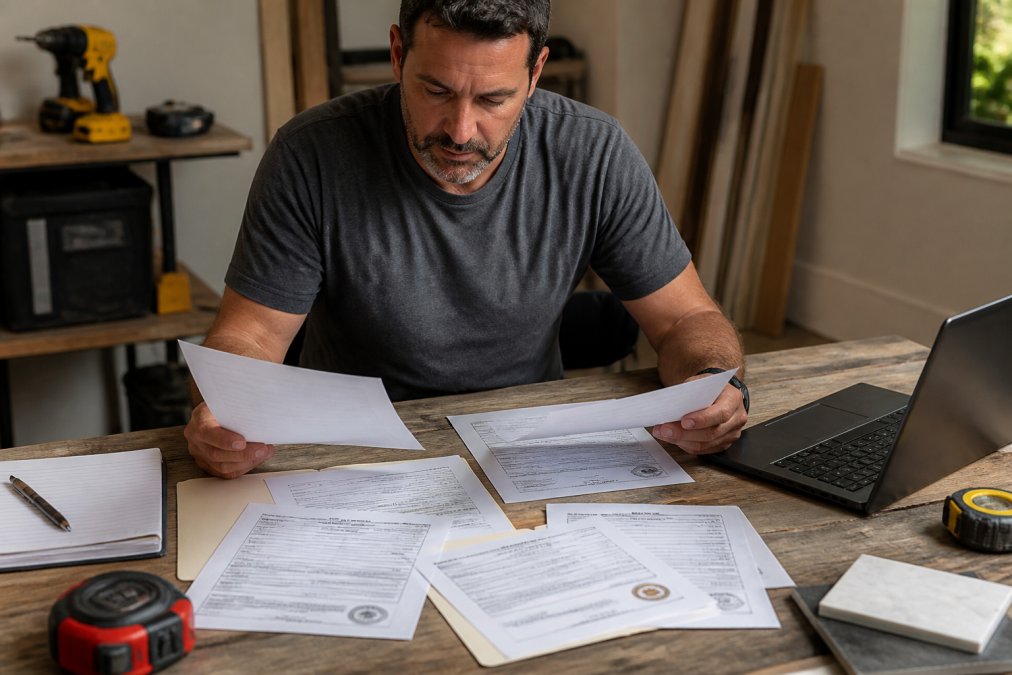
Check licensing and regulatory status first. In most states, residential contractors must be licensed. Verify this through your state’s licensing board, don’t just take their word. For Arizona, the Registrar of Contractors (ROC) maintains a public database. Search by name or license number. Look for any disciplinary history, complaints, or license suspensions. A clean record doesn’t guarantee quality, but violations are a major red flag.
Verify insurance and bonding. Ask for proof of current liability insurance and a performance bond. Call their insurance agent directly to confirm coverage is active, don’t rely on a certificate they show you. Insurance protects you if someone gets injured on your property. A bond protects you if the contractor abandons the project or doesn’t pay subcontractors.
Talk to recent customers directly. References matter, but pick ones you actually call. Ask specific questions: Did the contractor stay on schedule? Did costs match the estimate? Was communication consistent? Did the owner stay involved? Ask about any problems that came up and how they were handled. A contractor who’s transparent about challenges is more trustworthy than one who claims everything was perfect.
Review their portfolio and past work. Ask to see photos of completed projects similar to yours. Better yet, ask if you can visit an active job site or a recently completed one. Seeing their work in person tells you more than photos. Pay attention to detail: Are corners clean? Are finishes consistent? Does the work look rushed or careful?
Check online reviews, but don’t rely on them alone. Google reviews, Better Business Bureau ratings, and industry-specific sites give you a sense of reputation. Look for patterns in complaints, if multiple reviews mention communication issues or budget overruns, that’s a signal. But remember that disgruntled customers are more likely to leave reviews than satisfied ones, so take the ratings in context.
Get detailed written estimates from at least two contractors. Compare not just price, but what’s included. A low estimate might exclude things the higher estimate includes. Ask for a line-item breakdown so you understand where money is going. Red flags include vague descriptions like "labor" without specifics, or estimates that are significantly lower than others without clear explanation.
Ask about their subcontractors and how they manage them. Quality work depends on quality subs. Ask which subcontractors they use regularly, whether they’re licensed, and how they handle quality control. A contractor who works with the same trusted subs repeatedly shows consistency. One who uses different crews every time suggests they’re just coordinating bodies, not managing quality.
Understand their communication process. How often will you hear updates? Will they use a project management platform, phone calls, or text messages? How quickly do they respond to questions? This matters because communication breakdowns create stress and misunderstandings. A contractor who commits to daily site photos and weekly check-ins is more transparent than one who says "I’ll call you if there’s a problem."
Review the contract thoroughly before signing. The contract should include scope of work, timeline, payment schedule, warranty terms, and how changes are handled. If anything is vague, ask for clarification in writing. Don’t sign a contract with blank spaces or verbal agreements about what’s included. Everything should be documented.
Liability, Insurance, and Risk Mitigation
Working with a properly insured contractor protects you from catastrophic financial risk. If someone gets injured on your property during construction, or if the contractor damages your home or a neighbor’s property, their liability insurance covers it, not you. This is non-negotiable.
Verify their insurance covers the specific work they’re doing. A contractor with general liability insurance might not be covered for roofing work or electrical work, depending on their policy. Ask for a certificate of insurance that names you as an additional insured. That ensures you’re protected if a claim arises.
Bonding adds another layer. A performance bond guarantees that if the contractor abandons the project or fails to complete it, the bonding company will step in to finish the work or refund your money. A payment bond protects subcontractors and material suppliers if the contractor doesn’t pay them, which prevents liens from being filed against your property.
Change orders should always be in writing. When scope changes mid-project, document exactly what’s being added, what the cost is, and how it affects the timeline. A verbal agreement about a change is a setup for conflict. Written change orders prevent misunderstandings and protect both parties.
Understand your state’s mechanics lien laws. If a contractor doesn’t pay their subcontractors or material suppliers, those vendors can file a lien against your property, even if you paid the contractor in full. To protect yourself, ask the contractor for lien waivers from all subcontractors and suppliers before making final payment. This proves they’ve been paid and can’t file liens later.
Conclusion
Working directly with a contractor owner solves problems that plague most renovation projects: unclear communication, hidden costs, quality shortcuts, and accountability gaps. When the owner is your single point of contact, you get transparency, faster decision-making, and a genuine incentive for the contractor to deliver on their promises.
At Crosspoint Contracting, this approach has defined how we work for 16 years. You’re not handed off to a rotating project manager. You communicate directly with the owner, get same-day responses to questions, and see real-time project updates through our Projul technology platform. Our ROC licensing, bonding, and insurance protect you completely. Get a free quote and experience the difference that direct owner accountability makes.
Frequently Asked Questions
What does working directly with a contractor owner actually mean in practice?
Working directly with a contractor owner means you communicate with and receive decisions from the decision-maker, not a project manager or office staff. The owner oversees your project personally, handles budget decisions in real time, and is available for same-day communication. This eliminates delays waiting for approval from someone higher up and ensures consistency throughout the build. You know exactly who is responsible for your project's success.
How do I verify a contractor is properly licensed, bonded, and insured?
In Arizona, verify residential contractors through the Arizona Registrar of Contractors (ROC) database by searching their license number online. Ask the contractor for proof of their ROC license, liability insurance certificate, and bonding documents before signing any agreement. Request they provide their policy numbers and contact information for their insurance carrier so you can confirm coverage independently. Licensed contractors carry residential (ROC) or commercial (ROC) licenses depending on project type, confirm which applies to your work.
How can I prevent budget overruns and scope creep during a renovation?
Start with a detailed scope of work document that lists every task, material, and finish. Establish a change order process in writing before work begins so any additions require written approval and pricing. Work with a contractor who provides proactive cost management and real-time budget updates. Set a contingency reserve (typically 10-15% of project cost) for unforeseen issues. Regular communication and weekly budget reviews help catch variances early before they compound into major overruns.
What should I look for when vetting a home renovation contractor's experience and track record?
Ask for references from recent projects similar in scope to yours, then contact those clients directly about timeline, budget adherence, and communication quality. Review online ratings and testimonials for patterns, one bad review is common, but multiple complaints about the same issue signal a real problem. Request to see photos of completed work and ask if you can visit an active job site to observe how the contractor manages the work. Verify their licensing history has no serious complaints or disciplinary action through the ROC.
This article was written using GrandRanker