


Table of Contents
- Why Small Remodeling Firms Deliver Better Results
- Direct Accountability: Working With the Owner, Not a Project Manager
- Questions to Ask a Remodeling Contractor
- How to Vet a Residential Contractor
- Remodeling Project Timeline Expectations
- Cost Management and Budget Transparency
- Small Firm Advantages for Complex Renovations
- Frequently Asked Questions
Last Updated: September 3, 2026
Why Small Remodeling Firms Deliver Better Results
When homeowners hire a contractor for renovation work, they often assume bigger is better. The opposite is frequently true. A small remodeling firm delivers superior results because the owner is directly accountable for every decision, timeline, and dollar spent on your project. At Crosspoint Contracting, we’ve spent 16 years building a business model around this principle: you work directly with the owner, not a rotating cast of project managers. Large firms manage dozens of projects simultaneously, so your kitchen remodel becomes one line item in a quarterly report. Communication flows through layers, change orders take weeks, and problems get escalated instead of solved. A small firm operates differently. The owner answers the phone, reviews blueprints, and makes decisions on-site. When you hire a small firm, you’re hiring someone whose business success is directly tied to your satisfaction.
Direct Accountability: Working With the Owner, Not a Project Manager
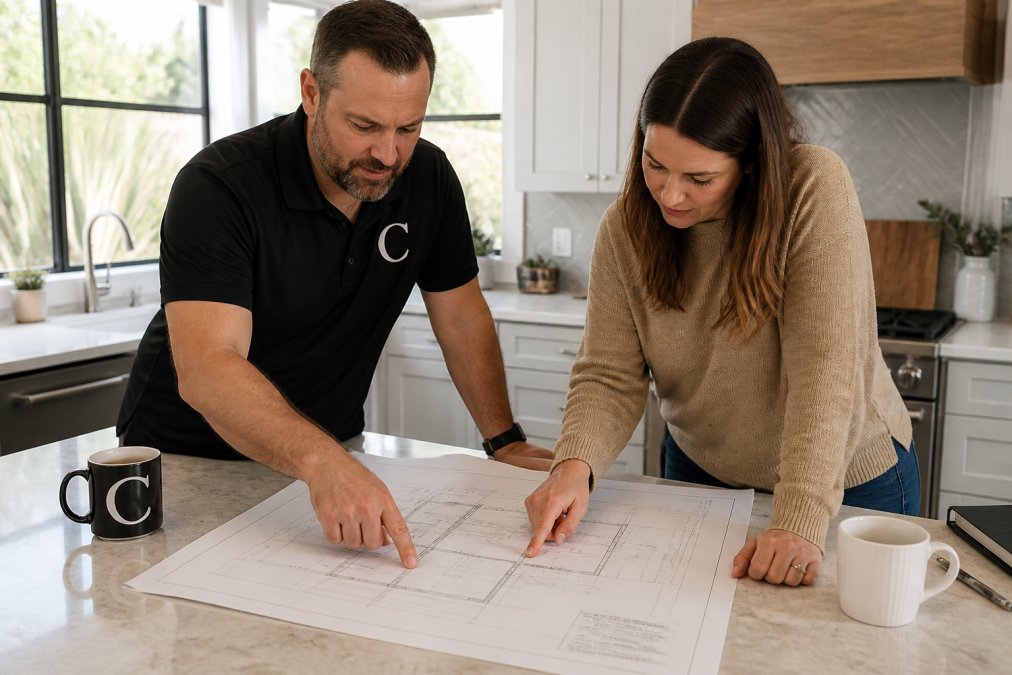
The single biggest advantage of a small remodeling firm is direct accountability. You speak to the decision-maker, not an account manager or project coordinator. When something goes wrong, the owner can make decisions immediately. A framing issue discovered mid-project gets fixed the same day because the person who owns the business owns the problem. Large firms use project managers as a buffer, which creates delays and manages expectations downward. A small firm eliminates this middle layer entirely.
When Kathy Robinett worked with Crosspoint Contracting on her home renovation, she experienced this directly. Cliff was upfront on price quotes and kept her informed throughout the build, no surprises, no delays in getting answers. The accountability structure also affects how work gets done. When the owner is responsible for quality, they’re actively involved in your project, not managing five jobs from an office. This visibility creates natural quality control. For complex renovations involving structural work or quirky plumbing and electrical systems, the owner’s involvement means fewer surprises and faster problem-solving.
Questions to Ask a Remodeling Contractor
Before hiring any contractor, ask the fundamentals: How long have you been in business? What’s your licensing status? For residential work, verify that the contractor holds a current ROC license through the Arizona Registrar of Contractors website (azroc.gov). This ensures they’ve passed background checks, maintain bonding and insurance, and are subject to regulatory oversight.
Ask about communication. How often will you hear from them, and through what method? A contractor who commits to same-day communication is making a real promise. Dig into their experience with your specific project type. If you’re planning a whole-house renovation, you need someone who’s managed complex, multi-phase projects. Ask how they handle the unexpected, renovation projects almost always uncover hidden problems. Does the contractor have a clear framework for managing scope changes? Finally, call references and ask about timeline, budget, and whether the contractor communicated proactively or only when problems forced contact.
How to Vet a Residential Contractor
Start with licensing. Verify the contractor’s ROC license is current and in good standing, and that it covers the type of work you need. Check bonding and insurance by asking for proof and calling their insurance agent to verify coverage is active. Look at their online presence, 50+ verified reviews across multiple platforms indicate a track record you can evaluate. Read negative reviews carefully; patterns matter more than individual complaints. benefits of local businesses.
Check the Better Business Bureau for ratings based on complaint history and how the business responds. Talk to their subcontractors, a contractor who works with the same electrician, plumber, and framers year after year demonstrates trusted standards. Ask for a walkthrough of a recent project. A contractor confident in their work will show you one, and you’ll see the quality of finishes and how details are handled.
Remodeling Project Timeline Expectations
A realistic timeline for a kitchen remodel typically ranges from 6 to 12 weeks (nahb.org). A whole-house renovation might take 4 to 6 months. A primary suite addition could take 3 to 4 months. These aren’t precise because renovation work depends on factors the contractor can’t fully control: permit approval times, material delivery delays, and discoveries during demolition.
Ask the contractor how they structure the timeline and whether they break the project into phases. Do they identify which phases are on the critical path? Ask about their scheduling practices and how they coordinate subcontractors. For a small remodeling firm, timeline management is often more reliable because there’s less juggling of resources across multiple projects. Understand the phases of your specific project: demolition and rough work typically move fastest, inspections can create bottlenecks, finishing work takes longer than homeowners expect, and material delivery is a common delay point. A contractor who walks you through these phases and explains where delays typically occur is being realistic.
Cost Management and Budget Transparency
Budget overruns are a common complaint about renovation work. A small remodeling firm has an advantage because the owner is directly accountable for cost management and isn’t trying to hit quarterly profit targets by cutting corners.
Start with a detailed estimate that breaks down labor, materials, and overhead, specifying what’s included and what’s not. Ask how the contractor handles scope changes. Scope creep is the primary driver of budget overruns. A contractor with a clear change order process protects both of you. Understand what contingencies are built into the estimate, typically 10 to 15 percent of project cost (aia.org). This isn’t padding; it’s realistic planning for unknowns. Ask about payment terms. Typically, payment is structured in phases: a deposit to secure the start date, progress payments as work is completed, and final payment upon completion. Avoid contractors who want large upfront payments before work begins or payment in full before the final walkthrough.
Small Firm Advantages for Complex Renovations
Complex renovations, whole-house projects, structural additions, and commercial buildouts require a different level of coordination than straightforward remodels. A small remodeling firm can focus where a large firm managing five complex projects simultaneously is likely to have coordination failures.
For structural work, the owner’s presence matters enormously. Adding a primary suite or expanding a kitchen might require structural modifications. These decisions need to be made by someone with deep knowledge of building codes and structural principles. A small firm owner typically has this expertise. Commercial work adds another layer of complexity. Building codes for commercial spaces are stricter than residential codes, and timelines are often tighter. A contractor experienced in commercial work understands these constraints and knows how to sequence work to minimize business disruption. For renovations involving permits and inspections, a small firm’s experience with the local permitting process is invaluable. They know which inspectors are particular about certain details and have built relationships with the building department over years of projects.
Hiring a small remodeling firm isn’t just about saving money, though that’s often a benefit. It’s about getting someone directly accountable for delivering what they promise. When the owner is the person you work with, communication is faster, decisions are made immediately, and quality control happens naturally.
Crosspoint Contracting has spent 16 years delivering on this promise. We’re licensed, bonded, and insured for both residential and commercial work. You work directly with the owner, not a project manager. We use real-time project updates so you’re always informed. Get a free quote and see how direct accountability changes your renovation experience.
Frequently Asked Questions
What are the primary benefits of working with a small, owner-operated remodeling firm?
Small remodeling firms offer direct accountability, personalized attention, and streamlined decision-making. You work with the owner rather than rotating project managers, which means faster communication, consistent quality oversight, and someone who genuinely cares about your project outcome. Small firms also handle complex problems on-site rather than escalating them through layers of management, saving time and reducing costs.
How does a small firm handle project timelines compared to larger companies?
Small remodeling firms typically offer more flexible scheduling and faster problem resolution. Because they manage fewer simultaneous projects, they can dedicate focused attention to your renovation timeline. They’re also more agile when unexpected issues arise, the owner can make decisions immediately rather than waiting for approval from upper management, which keeps projects moving forward and prevents costly delays.
What are red flags to watch for when hiring a residential contractor?
Watch for contractors who avoid written estimates, pressure you to pay large deposits upfront, lack proper licensing or insurance verification, or refuse to provide references. Red flags also include vague timelines, reluctance to discuss building codes and permits, promises that sound too cheap, and contractors who won’t explain their process. Always verify ROC licensing through official directories and ask for proof of bonding and insurance before signing any agreement.
How can I verify that a contractor is properly licensed and insured?
Ask for the contractor’s ROC (Registrar of Contractors) license number and verify it directly on the ROC website. Request certificates of insurance and bonding, and contact the insurance company to confirm coverage is active. A reputable contractor will provide this information immediately and have no issue with verification. Licensed contractors are held accountable to building codes, safety standards, and professional standards that protect you and your investment.
This article was written using GrandRanker